The Corporate Case for Coworking
Coworking used to feel like it belonged to a specific kind of person: the freelancer, the founder, the scrappy startup of three. But that picture has shifted considerably. Today, some of the most recognisable names in business are quietly making coworking spaces part of how they operate - not as a stopgap, but as a long-term strategy.
Why the shift?
Hybrid work has become the baseline expectation for most knowledge workers, and businesses have had to rethink what "the office" is actually for. Rather than maintaining large, underutilised leases, many companies are downsizing their permanent footprint and supplementing with high-end coworking memberships, giving their teams a professional environment when they need it, without the overhead when they don't.
At Collective 100, we see this playing out in real time. Established businesses are showing up not just for a one-off meeting room booking, but as regulars. Some take permanent offices. Others come and go as the week demands. Either way, they keep coming back.
More than just a desk
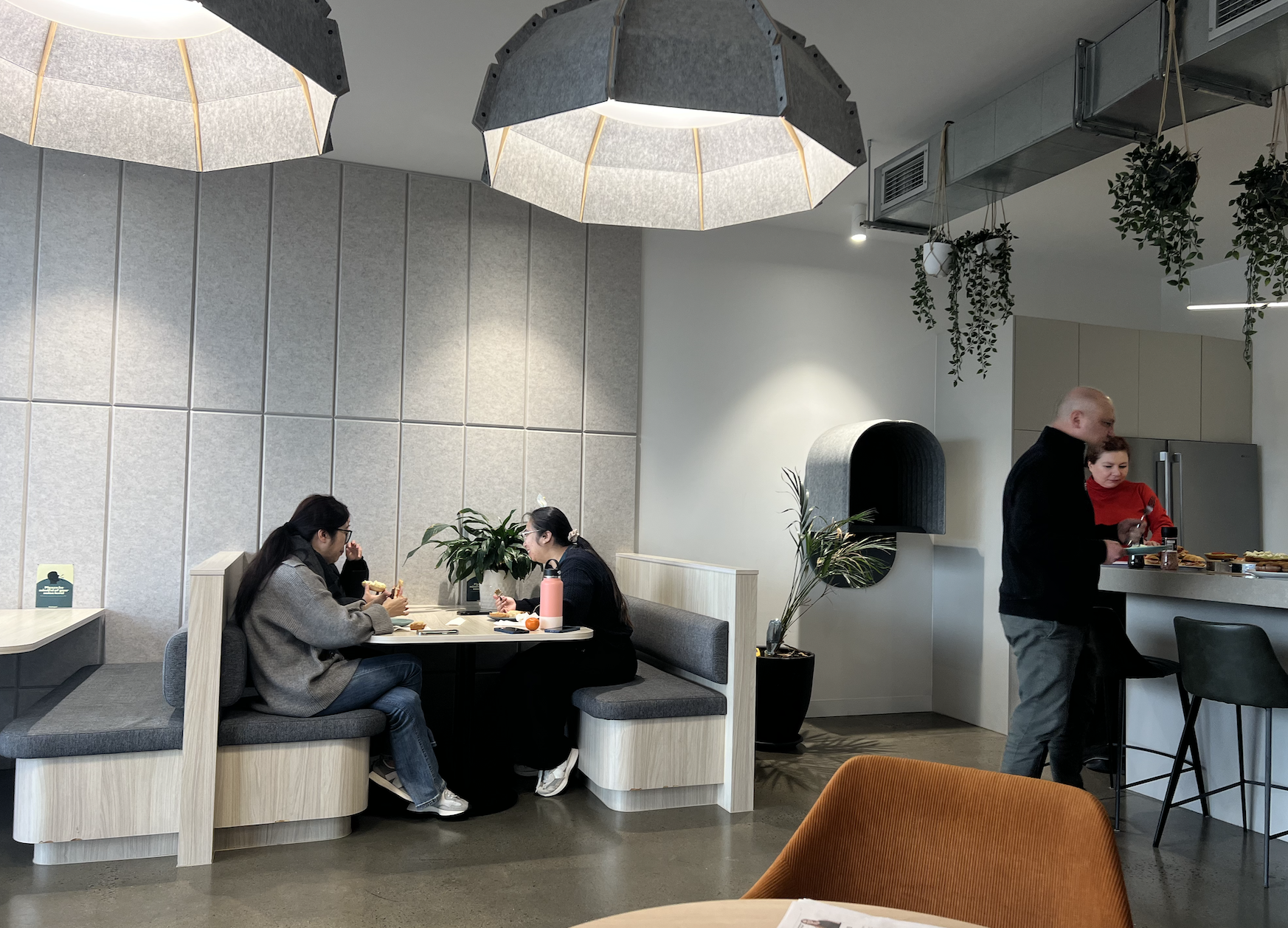
What often surprises people is how much value comes from being in a shared space beyond the physical amenities. When a larger business sits alongside a growing startup, or a solo consultant ends up in the kitchen with a team from a completely different industry, something useful tends to happen. Ideas get shared. Introductions get made. Collaborations form that wouldn't have otherwise.
That kind of proximity is hard to manufacture, and it's one of the things a well-run coworking space does naturally.
The numbers make sense
A traditional lease comes with a long list of fixed costs: rent, outgoings, cleaning, maintenance, reception, meeting rooms, fit-out. Coworking bundles most of that into a single, predictable membership — and gives you the flexibility to scale up or down as your team changes.
For businesses reassessing their property commitments, it's becoming an increasingly easy case to make.

.svg)