Choosing a coworking space used to be simple. You needed a desk, decent Wi-Fi, and a coffee machine that worked. But as businesses of all sizes have embraced flexible working, the stakes have gotten higher. The wrong space can fracture your team culture, create operational headaches, and cost you more than a traditional lease ever would.
So where do you start? We've broken it down into the questions that matter most. And if you're evaluating spaces for a company with scale, structure, and longevity in mind, these questions will be especially useful.
"What should I look for in a coworking space?"
It depends on what you're optimising for. Most people start with the obvious: location, price, and amenities. But the businesses that make the best coworking decisions go deeper. They ask about the community, the flexibility of the lease, the quality of the infrastructure, and critically - what happens when their needs change.
A short checklist to start with:
– Is the location convenient for your team (and your clients)?
– What's included in the membership, and what's an add-on?
– How flexible are the terms if you need to scale up or down?
– What does the community look like, and does it match your company's culture?
– Who actually owns and operates the space?
"Is coworking suitable for large or enterprise teams?"
Absolutely - but not every coworking space is built for it. Many spaces are designed for individuals and small startups. If you're bringing a team of ten, fifteen, or twenty-plus people into a space, you need an operator who has thought seriously about how enterprise teams actually work.
At collective_100 in Cremorne, we accommodate teams ranging from a single person to 22 or more.That range is intentional. We've built the space and our model to flex around the size of your team - not the other way around.
What enterprise teams need that solo workers don't:
– Dedicated or semi-private areas that can be configured for their workflow
– Reliable, enterprise-grade internet and AV infrastructure
– Meeting rooms and boardrooms that can handle client-facing work
– A space identity that reflects well on the company
– An operator who can move quickly when requirements change
"What amenities do professional coworking spaces offer?"
The baseline is well-established: fast internet, meeting rooms, printing, kitchen facilities, and mail handling. But for professional teams, especially those representing national or multinational brands, the bar is higher.
Look for spaces that offer boardrooms suitable for client presentations, video conferencing infrastructure, a professional reception presence, and productive breakout space. The environment says something about your company. Make sure it says the right things.
One detail that matters more than most people realise: collective_100 is completely unbranded. When your clients visit, they won't see coworking signage, shared-space branding, or anything that signals you're in a flexible workspace. To them, it looks and feels like your company occupies the building. Our team speaks on your behalf, not as an obvious third party managing a coworking floor, but as an extension of your business. For companies where perception and presentation matter, this is a significant advantage that most coworking operators simply can't offer.
At collective_100, we're located at Level 2, 100 Cubitt Street, Cremorne - a professional address in one of Melbourne's most sought-after inner-city business precincts. The space is designed to function as a genuine business environment, not just a place to put laptops.
"How do I choose a coworking space for my whole team?"
When you're choosing for a team, you need to think about workflow, not just headcount.Where will people take calls? Where will the team gather for standups? Where will clients be brought in? How will the space evolve if you hire three more people next quarter?
The best coworking operators will sit down with you and map this out before you commit.If they can't or won't do that, they're not built for teams - they're built for individuals.
"Can a coworking space support a multinational company?"
Yes - if the operator is set up for it. This is the question that separates boutique professional spaces from generic hot-desk providers.
Multinational teams typically need consolidated billing, flexible configurations across different team sizes, and a stable environment that doesn't change every few months because a landlord has other plans. They also need speed - when a regional team lands in Melbourne and needs a base quickly, procurement processes don't always allow for six-week negotiation cycles.
This is what makes collective_100 different. We own our building. That means we're not at the mercy of a landlord's approval process, or change of priorities. When a client needs something customised - a particular layout, a specific configuration, a fast decision - we can make it happen. Our approval process is internal, our team is small, and our decisions are quick.
We're the most flexible coworking space in Cremorne precisely because we control the asset. There's no corporate approvals chain. Just a direct conversation with the people who own and operate the space.
"What's the difference between a coworking space and a serviced office?"
It's a fair question, and the lines have blurred. Traditionally, a serviced office gives you a private, lockable space with a fixed configuration and a full-service support package. A coworking space is more open, more community-oriented, and more flexible.
The best modern coworking spaces - particularly boutique operators like collective_100 - blend both. You get the community energy and flexibility of coworking, with the privacy, professionalism, and customisation that enterprise teams expect from a serviced office environment.
The key question isn't coworking vs. serviced office. It's: does this operator have the flexibility to give me what I actually need?
"What's the benefit of a single-location coworking space?"
Multi-site coworking networks have their advantages - particularly for businesses with distributed teams. But there's something that single-location spaces do better: community.
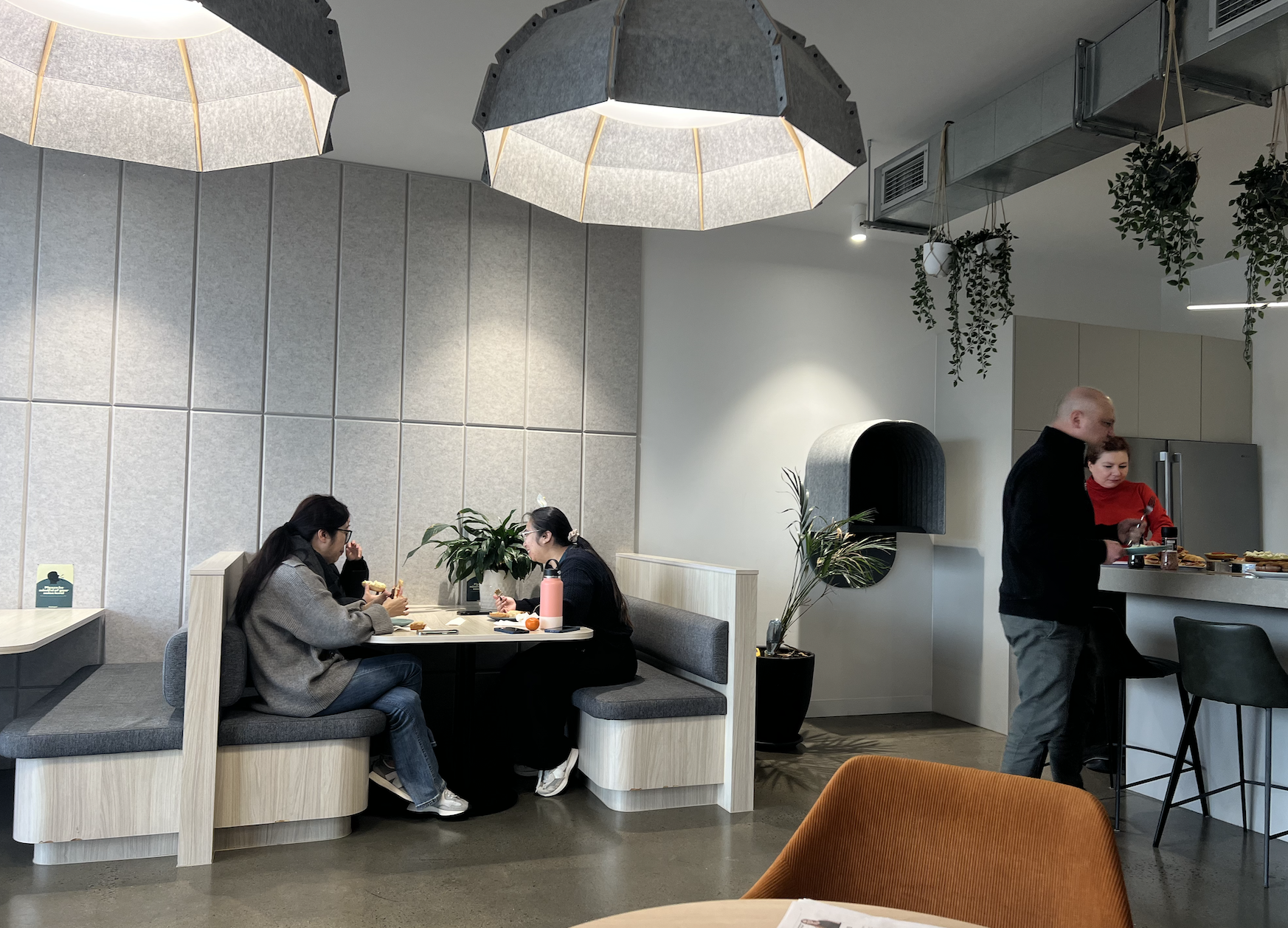
At collective_100, you see the same faces every day. Members know each other. The community gels in a way that's hard to replicate when people cycle through multiple locations or when there's constant turnover. Our retention is high, our community is tight-knit, and the relationships that form here are real professional relationships - not just a nod across a hot-desk floor.
For companies whose culture matters, and for the people they send into that environment -this is a significant differentiator. You're not just getting a desk. You're joining a community with continuity.
"How do I justify coworking to my CFO or leadership team?"
Frame it as a total cost of occupancy conversation, not a rent conversation. A traditional lease ties you to a fixed footprint, a long commitment, and significant capex for fit-out. Coworking converts that to an operational expense - predictable, scalable, and without the sunk cost of a space that doesn't quite fit.
For national and multinational companies, the calculation gets more interesting. Coworking in key cities gives you a professional presence without the overhead of establishing a local entity, hiring office managers, and managing facilities contracts. You pay for exactly what you use.
Add to that the community value - your people are working alongside other high-calibre professionals rather than in isolation - and the productivity case writes itself.
Ready to see if collective_100 is the right fit?
We're at Level 2,100 Cubitt Street, Cremorne. We work with teams of one to twenty-two and beyond, and because we own the building, we can have a genuine conversation about what you need - and move quickly to make it happen.
Come in for a tour, or reach out directly at info@collective_100.com.au

.svg)